Herbal tea · India
Tulsi (Holy Basil)
Sacred Ayurvedic herb known as the 'Queen of Herbs' with adaptogenic properties and clove-like flavor.
 How to brew
| Leaf | Water | Temperature | Time | Infusions | |
|---|---|---|---|---|---|
| Western | 3 g | 250 ml | 95°C / 203°F | 7 min | 3 |
About this tea
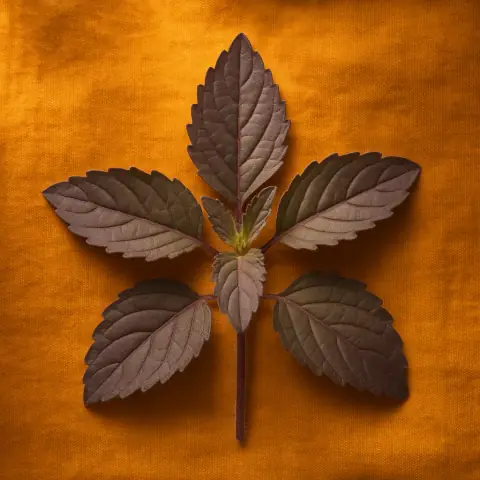
Tulsi (Ocimum tenuiflorum), revered as 'The Incomparable One' in Hinduism, grows in almost every Indian home's courtyard. This sacred basil is worshipped as an incarnation of the goddess Lakshmi, with daily rituals involving watering and prayers. Beyond spirituality, Ayurveda considers it the 'Queen of Herbs' - a rasayana, in its own traditional vocabulary.
Three varieties are commonly used: Rama (green), Krishna (purple), and Vana (wild). Each offers slightly different flavors and properties. The leaves are harvested regularly, encouraging bushier growth. Traditional processing involves gentle drying in shade to preserve volatile oils including eugenol (also in cloves), creating the characteristic spicy-sweet aroma. Quality tulsi shows vibrant color with strong clove-like scent.
The flavor profile is complex and warming: dominant clove and cinnamon notes with hints of lemon and licorice. There's a spicy warmth without heat, and subtle sweetness. Krishna tulsi is more clove-like, Rama more mellow, Vana more lemony. The aromatic compounds create a slight numbing sensation. The golden to purple liquor (depending on variety) releases spicy-sweet aroma that clears sinuses.
Brewing recommendations: Use 1-2 teaspoons (3g) dried leaf per 250ml cup with water at 95°C (203°F). Steep 7 minutes - longer brings out more spice. Fresh leaves need only brief steeping. Traditionally prepared with ginger and honey. Blends beautifully with other herbs. Indians often add it to regular chai.
An everyday cup in Indian households, drunk morning and evening. Safe for long-term use. Avoid during pregnancy or with blood thinners. In India, consumed throughout the day for vitality. The spiritual associations add meditative quality to tea time.
Caffeine, in context
Per 250 ml cup, brewed as directed.
Flavor profile
- clove-like
- spicy
- sweet
- aromatic
Health benefits
- adaptogen
- stress relief
- immune support
- respiratory health
Pairs wonderfully with
- honey
- ginger
- meditation
- yoga practice
You might also enjoy


Frequently asked questions
Can you re-steep Tulsi (Holy Basil)?
Yes — Tulsi (Holy Basil) gives 3 good infusions. Start at 420 seconds and add a little time to each round.
How much caffeine is in Tulsi (Holy Basil)?
0 mg per 250 ml cup — Caffeine-free.
What water temperature does Tulsi (Holy Basil) need?
95°C / 203°F. Hotter water pulls out bitterness; cooler water under-extracts the leaf.
Teafinity times every infusion for you
The app loads this tea's exact schedule, rings even in your pocket, and logs every session — free on iPhone and Android.

