White tea · Fujian, China
White Hair (Shou Mei)
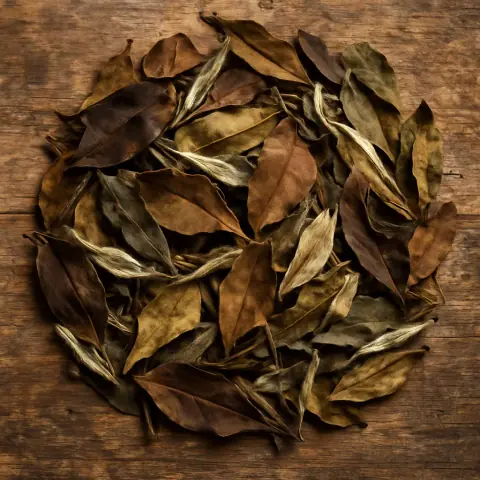
Aged white tea with larger leaves, offering a fuller body and fruity, slightly woody character.
 How to brew
| Leaf | Water | Temperature | Time | Infusions | |
|---|---|---|---|---|---|
| Western | 4 g | 250 ml | 90°C / 195°F | 4 min | 5 |
| Gong Fu | 6 g | 100 ml | 90°C / 195°F | 20 s + | 10 |
About this tea
Shou Mei (Longevity Eyebrow) represents the heartiest grade of traditional white tea, made from mature leaves picked later in the season after Silver Needle and White Peony harvests. Despite being considered a 'lower grade,' Shou Mei has gained tremendous appreciation, particularly for its aging potential - vintage Shou Mei can command prices exceeding young Silver Needle. The name refers to the long, thin leaves resembling the eyebrows of a long-lived elder.
Harvested in late spring or autumn, Shou Mei consists primarily of larger, mature leaves with few buds. The later harvest means leaves have developed more polyphenols and complexity. Traditional processing involves extended withering (often 36-48 hours) and careful drying that preserves enzymes for future aging. The leaves appear darker - brown and green hues rather than silver - indicating their maturity and robust character.
The flavor profile is bold for a white tea: immediate notes of dried apricot, fig, and honey give way to subtle woodiness and pleasant astringency. Fresh Shou Mei offers fruity sweetness balanced by vegetal notes, while aged versions develop incredible complexity - dark honey, Chinese herbs, aged wood, and a thick, coating mouthfeel. The transformation through aging is remarkable, with 10+ year old Shou Mei resembling aged Sheng Pu-erh in complexity. The liquor ranges from golden to deep amber depending on age.
Brewing recommendations: Use 1.5 tablespoons (5g) per 250ml cup with water at 90°C (195°F), steeping for 4 minutes. The mature leaves benefit from hotter water. For gongfu style, use 5-6 grams for multiple short infusions. Aged Shou Mei can handle near-boiling water and benefits from a quick rinse. This tea easily provides 8-10 infusions, with each revealing different aspects.
Excellent throughout the day, particularly after meals as a digestive. Pairs wonderfully with roasted meats, aged cheeses, nuts, and dried fruits. Also complements rich desserts where its body stands up to strong flavors. Many Chinese tea drinkers specifically collect Shou Mei for aging, storing it like Pu-erh. Fresh versions offer immediate enjoyment while aged versions provide contemplative complexity. Higher caffeine than delicate whites (22mg) but still moderate.
Caffeine, in context
Per 250 ml cup, brewed as directed.
Flavor profile
- fruity
- woody
- honey
- robust
Health benefits
- antioxidants
- aged tea benefits
- digestion
- warming
Pairs wonderfully with
- dried fruit
- nuts
- aged cheese
- hearty snacks
You might also enjoy
Frequently asked questions
Can you re-steep White Hair (Shou Mei)?
Yes — White Hair (Shou Mei) gives 10 good infusions. Start at 20 seconds and add a little time to each round.
How much caffeine is in White Hair (Shou Mei)?
22 mg per 250 ml cup — Low caffeine.
What water temperature does White Hair (Shou Mei) need?
90°C / 195°F. Hotter water pulls out bitterness; cooler water under-extracts the leaf.
Teafinity times every infusion for you
The app loads this tea's exact schedule, rings even in your pocket, and logs every session — free on iPhone and Android.

