Herbal tea · Mediterranean
Licorice Root
Licorice Root is caffeine-free.
Naturally sweet root with distinctive anise-like flavor, 50 times sweeter than sugar.
 How to brew
| Leaf | Water | Temperature | Time | Infusions | |
|---|---|---|---|---|---|
| Western | 1 g | 250 ml | 100°C / 212°F | 15 min | 3 |
How to brew Licorice Root
- Heat water to 100 °C (212 °F).
- Add 1 g of Licorice Root for 250 ml of water.
- Steep for 15 min, then strain.
- Re-steep the same leaves up to 2 more times.
About this tea
Licorice root (Glycyrrhiza glabra), the 'sweet root' of ancient civilizations, has sweetened medicines and confections for 4,000 years. Egyptian pharaohs drank licorice tea, while Napoleon supposedly chewed so much his teeth turned black. The root contains glycyrrhizin, a compound 50 times sweeter than sugar but without calories. This Mediterranean native now grows worldwide, with different varieties offering subtle flavor variations.
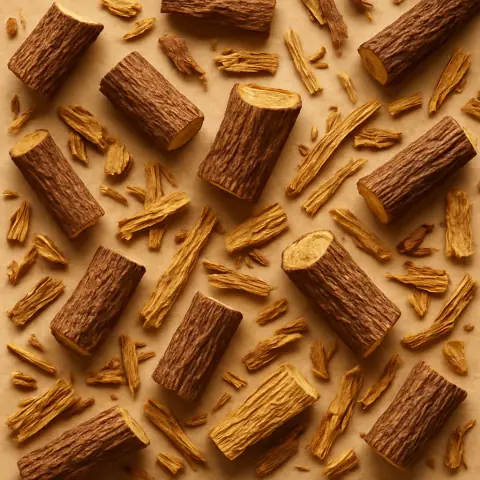
The woody roots require 3-4 years growth before harvest. After digging, they're cleaned, dried, and often cut into chips or powder. The sweetness concentrates during drying. Quality licorice shows tan to light brown color with fibrous texture and intense sweet aroma. Chinese licorice (gan cao) is slightly different, used more medicinally. Avoid heavily processed black licorice candy - it's different from the pure root.
The flavor profile is complex sweetness: initial honey-like sweetness followed by distinctive anise/fennel notes, though botanically unrelated to those plants. There's a lingering sweet aftertaste that coats the mouth. Some detect vanilla, caramel, or even salty notes (hence 'salmiak' licorice in Nordic countries). The sweetness builds rather than hits immediately. The golden-amber liquor has full body and silky texture.
Brewing recommendations: Use 1/2 teaspoon (1g) dried root per 250ml cup - a little goes far. Simmer for 15 minutes or steep in boiling water (100°C/212°F) for 15 minutes. Combines excellently with other herbs, adding sweetness without sugar. Traditional combinations include ginger, cinnamon, or fennel. Too much creates cloying sweetness.
The silky, mouth-coating texture is its signature - unlike anything else in the herbal cupboard. However, avoid large amounts or daily use - glycyrrhizin can raise blood pressure and deplete potassium. Not for pregnant women, those with high blood pressure, or heart conditions. Maximum 2-3 cups daily for no more than 4 weeks. The natural sweetness makes it perfect for sweetening bitter herbal blends.
Caffeine, in context
Per 250 ml cup, brewed as directed.
Flavor profile
- sweet
- anise-like
- smooth
- rich
- throat soothing
- digestion
- adrenal support
- anti-inflammatory
Pairs with
- fennel
- peppermint blend
- throat lozenges
- no sweetener needed
Similar teas


Frequently asked questions
Can you re-steep Licorice Root?
Yes. Licorice Root gives 3 good infusions. Start at 900 seconds and give each later round a little longer.
How much caffeine is in Licorice Root?
0 mg per 250 ml cup. Caffeine-free.
What water temperature does Licorice Root need?
100°C / 212°F. Hotter water pulls out bitterness; cooler water under-extracts the leaf.
Every infusion gets its own clock
Teafinity keeps the temperature, leaf ratio and steeping schedule ready, rings while the phone is in your pocket, and logs the session. 30 teas are free on iPhone and Android.

