Green tea · Japan
Hojicha
A 250 ml cup of Hojicha has about 15 mg of caffeine.
Roasted Japanese green tea with toasty, caramel notes and lower caffeine content.
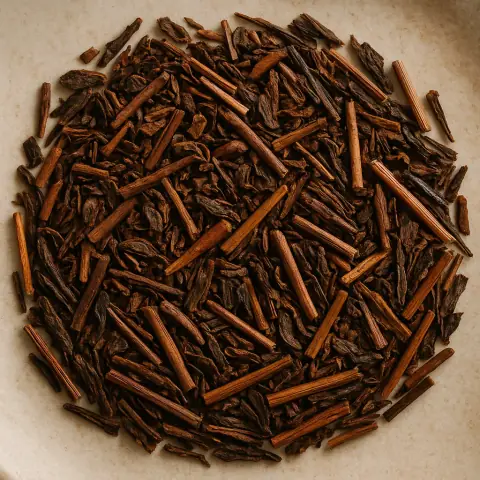
 How to brew
| Leaf | Water | Temperature | Time | Infusions | |
|---|---|---|---|---|---|
| Western | 3 g | 250 ml | 90°C / 195°F | 1 min | 4 |
How to brew Hojicha
- Heat water to 90 °C (195 °F).
- Add 3 g of Hojicha for 250 ml of water.
- Steep for 1 min, then strain.
- Re-steep the same leaves up to 3 more times.
About this tea
Hojicha emerged in 1920s Kyoto when tea merchants, seeking to utilize leftover leaves, stems, and late-harvest tea, discovered that roasting transformed humble ingredients into something extraordinary. This innovation democratized tea drinking in Japan, creating an affordable, approachable tea that quickly became a beloved everyday beverage across all ages.
The roasting process involves heating Bancha, Sencha, or Kukicha in porcelain or iron pots over high heat (typically 200°C/392°F), constantly turning to ensure even browning. This transforms green leaves to reddish-brown, fundamentally altering the tea's chemistry - breaking down caffeine and catechins while developing new aromatic compounds. The result is a tea chemically distinct from its green origins, with unique properties that make it suitable for evening drinking.
The flavor profile is warm and comforting: dominant roasted notes of caramel, toasted grain, and nuts, naturally sweet with no astringency or bitterness, smooth, clean finish with hints of mesquite, and warming quality perfect for cold weather. Unlike grassy green teas, Hojicha offers toasty comfort similar to coffee but without the intensity. The roasting eliminates most vegetal notes, creating something entirely different from typical Japanese green tea.
Brewing recommendations: Use 1 tablespoon (3g) per 250ml cup with water at 90°C (195°F), steeping for 1 minute. The roasting process makes Hojicha forgiving. Excellent hot or cold. Makes exceptional cold brew - steep overnight in refrigerator for naturally sweet, refreshing drink.
Perfect throughout the day due to low caffeine (about 7-10mg per cup vs. 30mg in Sencha). Popular with children and elderly in Japan. Pairs wonderfully with both sweet and savory foods - from chocolate and caramel desserts to grilled meats and roasted vegetables. Often served at Japanese restaurants at the end of a meal. The warming quality makes it ideal for autumn and winter enjoyment.
Caffeine, in context
Per 250 ml cup, brewed as directed.
Flavor profile
- toasty
- caramel
- nutty
- smooth
- antioxidants
- calming
- digestion
- evening friendly
Pairs with
- grilled foods
- chocolate
- nuts
- autumn desserts
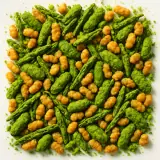
Similar teas

Frequently asked questions
Can you re-steep Hojicha?
Yes. Hojicha gives 4 good infusions. Start at 60 seconds and give each later round a little longer.
How much caffeine is in Hojicha?
15 mg per 250 ml cup. Low caffeine.
What water temperature does Hojicha need?
90°C / 195°F. Hotter water pulls out bitterness; cooler water under-extracts the leaf.
Every infusion gets its own clock
Teafinity keeps the temperature, leaf ratio and steeping schedule ready, rings while the phone is in your pocket, and logs the session. 30 teas are free on iPhone and Android.

