Oolong tea · Wuyi Mountains, China
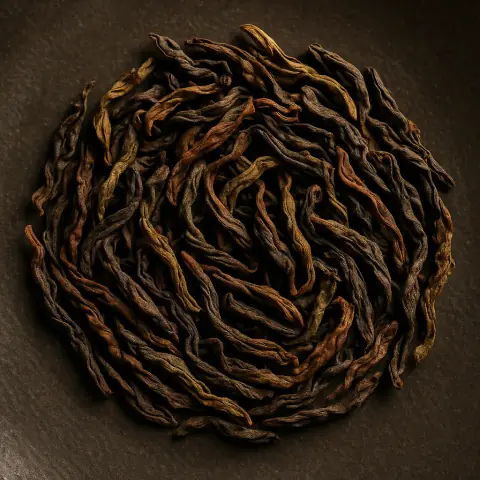
Qi Lan (Rare Orchid)
Wuyi rock oolong with pronounced orchid fragrance and perfect balance of floral and mineral notes.
 How to brew
| Leaf | Water | Temperature | Time | Infusions | |
|---|---|---|---|---|---|
| Western | 5 g | 250 ml | 93°C / 200°F | 1 min 30 s | 3 |
| Gong Fu | 8 g | 100 ml | 93°C / 200°F | 10 s + | 8 |
About this tea
Qi Lan (Rare Orchid) stands among Wuyi's most aromatic rock oolongs, prized for its extraordinary orchid fragrance that persists through numerous infusions. This cultivar's origins trace to the Ming Dynasty, though it gained prominence more recently as connoisseurs recognized its exceptional balance between floral delicacy and yancha's characteristic mineral strength. The name reflects both its rarity and its remarkable orchid-like aroma that seems to bloom in the mouth.
Grown on Wuyi's mineral-rich cliffs, Qi Lan develops its signature fragrance from the unique combination of cultivar genetics and terroir. The rocky soil's mineral content creates stress that concentrates aromatic compounds, while the cliff-side microclimate adds complexity. Processing requires masterful skill - oxidation (60-70%) must be precisely controlled to preserve floral notes while developing body. Multiple careful roastings over charcoal enhance depth without overwhelming the orchid character. The best Qi Lan achieves perfect harmony between flower and stone.
The flavor profile exemplifies yancha sophistication: pronounced orchid fragrance dominates initially, more intense and authentic than any flavored tea. This gives way to mineral notes - the taste of ancient stones and mountain springs. Underlying honey sweetness balances slight astringency. The texture is medium-bodied with the characteristic yan yun (rock rhyme) that coats the mouth. Multiple infusions reveal fascinating evolution from floral to mineral to sweet. The orchid fragrance remarkably persists even in later infusions when mineral notes dominate.
Brewing recommendations: Use 1 tablespoon (5g) per 250ml cup with water at 93°C (200°F), steeping for 90 seconds. High temperature releases both aromatics and minerals. For gongfu style, use 8g per 100ml, steeping 20-30 seconds initially. Rinse leaves once to open them. Can yield 8-10 complex infusions. Purple clay or porcelain work well.
Perfect for afternoon tea sessions when you want both refreshment and contemplation. The balance of floral and mineral makes it versatile for pairing. Excellent with Chinese pastries, roasted vegetables, nuts, and mild aged cheeses. The orchid notes complement rather than clash with savory foods. In Chinese tea culture, Qi Lan is served to demonstrate the host's tea knowledge and respect for guests.
Caffeine, in context
Per 250 ml cup, brewed as directed.
Flavor profile
- orchid
- mineral
- roasted
- honey
Health benefits
- antioxidants
- metabolism
- focus
- mineral intake
Pairs wonderfully with
- Chinese pastries
- roasted vegetables
- nuts
- aged cheese
You might also enjoy
Frequently asked questions
Can you re-steep Qi Lan (Rare Orchid)?
Yes — Qi Lan (Rare Orchid) gives 8 good infusions. Start at 10 seconds and add a little time to each round.
How much caffeine is in Qi Lan (Rare Orchid)?
41 mg per 250 ml cup — Medium caffeine.
What water temperature does Qi Lan (Rare Orchid) need?
93°C / 200°F. Hotter water pulls out bitterness; cooler water under-extracts the leaf.
Teafinity times every infusion for you
The app loads this tea's exact schedule, rings even in your pocket, and logs every session — free on iPhone and Android.

